Not every drywall issue requires full replacement. Understanding when repair makes sense and when new installation is necessary helps property owners make informed decisions.
## When to Repair vs. Replace Drywall
Drywall damage is common in both residential and commercial properties. The question property owners face is whether to repair existing drywall or replace sections entirely.
### When Drywall Repair Makes Sense
Repair is typically the right choice for:
**Small holes and dents**: Nail holes, doorknob impacts, and small punctures can be patched effectively. A skilled finisher can make these repairs invisible.
**Hairline cracks**: Settlement cracks and minor stress cracks can usually be taped and finished without replacement.
**Water stains (if dry and solid)**: If the stain is cosmetic only and the drywall is structurally sound, priming and painting may be sufficient.
**Localized damage**: When damage is confined to a small area, cutting out and patching that section works well.
### When New Installation is Required
Replacement becomes necessary when:
**Water damage has compromised the drywall**: Drywall that has been soaked loses structural integrity. It may feel soft, show warping, or have visible mold. This material cannot be salvaged.
**Mold is present**: Any drywall with mold growth should be removed and replaced. Mold penetrates the paper facing and gypsum core.
**Large holes or multiple damaged areas**: At some point, patching becomes more expensive and less effective than replacement.
**Renovation work**: When walls are opened for plumbing, electrical, or structural work, new drywall installation is typically required.
**Quality requirements**: Commercial spaces or high-end residential work may warrant new installation to achieve Level 5 finishes.
### The Finishing Factor
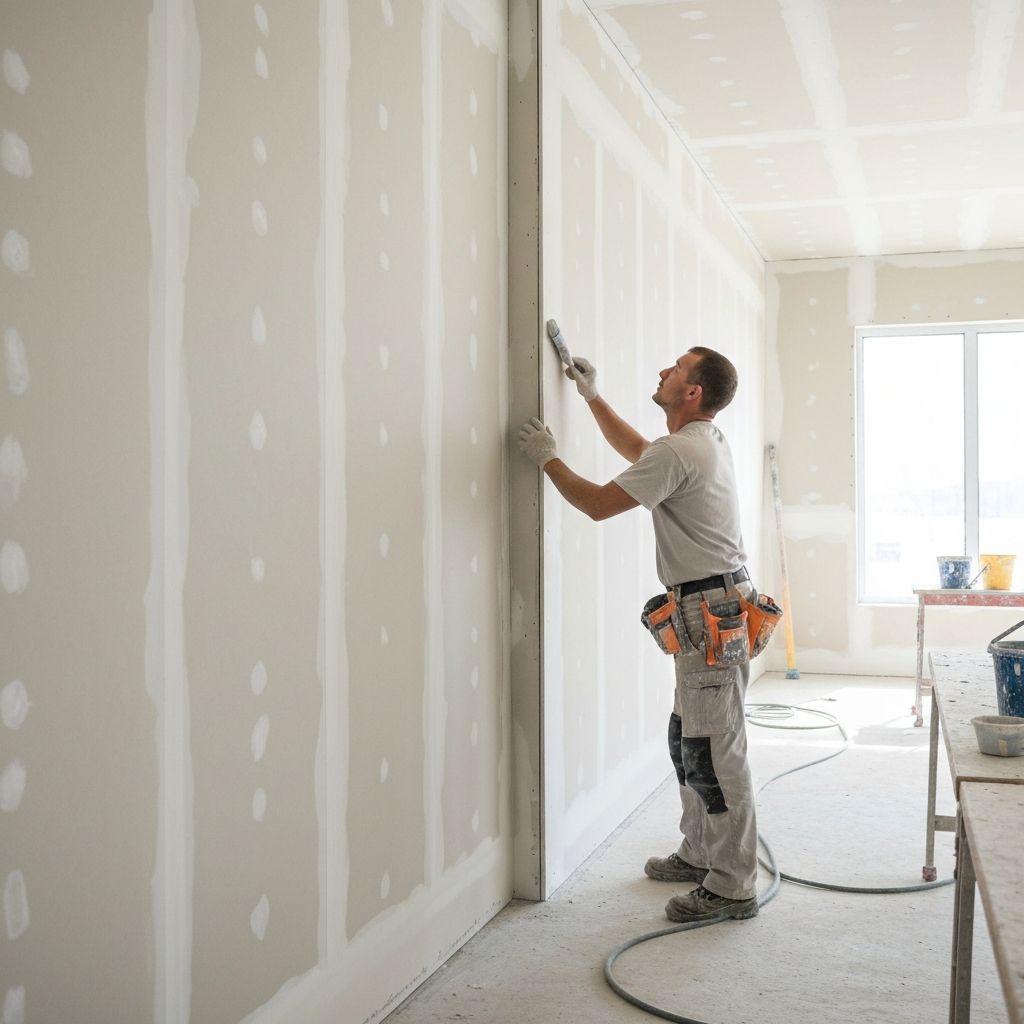
Remember that drywall work includes both hanging (installation) and finishing (taping, mudding, sanding). Even repairs require skilled finishing to blend seamlessly.
Poor finishing work is obvious—visible seams, bumpy surfaces, and texture mismatches. Quality finishing often matters more than whether the work is repair or replacement.
### Getting the Right Assessment
Before deciding, have a professional assess the damage. A qualified contractor can identify issues that may not be obvious, like hidden water damage or compromised areas behind intact surfaces.
The right approach depends on the specific situation. Sometimes repair is more cost-effective; sometimes replacement makes more sense long-term.